
Is your sofa sinking, losing its shape, or becoming uncomfortable? Before replacing your furniture, consider upgrading the foam inside your cushions.
Choosing the best foam density for sofa cushions can make a significant difference in comfort, support, and durability. Whether you own a sectional sofa, loveseat, armchair, or custom-built seating, understanding foam density helps you make an informed decision. At Xeno Upholstery and Comfort Products, a Canadian family-owned upholstery business in Vancouver, BC, we provide custom-cut foam and sofa cushion replacement services to help restore your furniture’s comfort and extend its useful life. In this guide, we’ll explain different foam densities, how to choose the right firmness, and what to consider when replacing your sofa cushions to ensure you select the best foam density for sofa cushions.
When deciding on the best foam density for sofa cushions, it’s essential to understand how different densities impact both comfort and longevity. The best foam density for sofa cushions plays a crucial role in ensuring adequate support and comfort for your seating experience.
What Is Foam Density, and Why Does It Matter?
Foam density refers to the mass of foam within a specific volume. For upholstery foam, it is commonly measured in pounds per cubic foot (lb/ft³).
For example:
1.5 lb density: A lower-density option generally suited to lighter-duty applications.
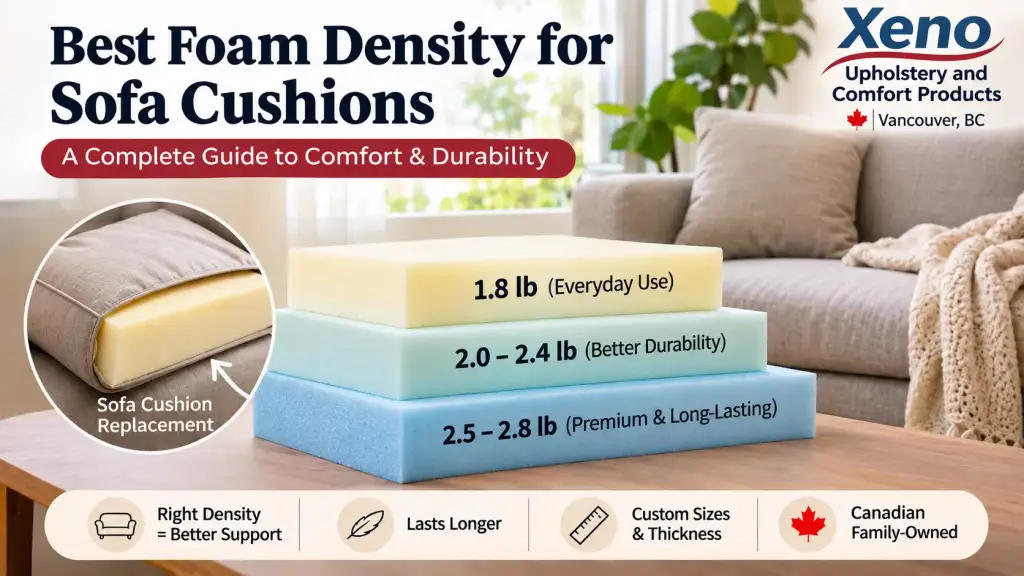
1.8 lb density: A common benchmark for residential sofa seat cushions.
2.0–2.4 lb density: A higher-density option for regular seating.
2.5–2.8 lb density: Often selected for premium upholstery and heavily used seating.
3.0 lb density or higher: A potential option for specialized, high-performance seating.
Generally, higher-quality polyurethane foam with greater polymer density offers better resistance to deterioration and can retain its original properties longer.
However, density is not the same as firmness. A high-density cushion can still feel soft, depending on its construction.
What Is the Best Foam Density for Sofa Cushions?
For most everyday sofa seat cushions, foam with a density of approximately 1.8–2.5 lb/ft³ is a practical starting point. For customers prioritizing long-term durability, premium foam around 2.5–2.8 lb/ft³ may be worth considering.
The ideal density depends on how often you use the sofa, the cushion thickness, the construction of the furniture, and your comfort preferences.
For the best foam density for sofa cushions, most experts recommend densities ranging from 1.8 to 2.5 lb/ft³, with a focus on personal comfort and intended use.
Foam Density Comparison Chart
A comprehensive understanding of the best foam density for sofa cushions can lead to informed purchasing decisions and improved overall seating comfort.
| Foam Density | Common Application | Recommendation |
|---|---|---|
| 1.0–1.5 lb/ft³ | Light padding and decorative cushions | Not generally preferred for heavily used seats |
| 1.5–1.7 lb/ft³ | Occasional-use seating | Budget or light-use applications |
| 1.8–2.0 lb/ft³ | Residential sofa cushions | Good everyday starting point |
| 2.0–2.4 lb/ft³ | Regular-use furniture | Better durability potential |
| 2.5–2.8 lb/ft³ | Premium sofa and sectional seating | Strong option for frequent use |
| 3.0+ lb/ft³ | Selected specialty and commercial seating | Evaluate specifications and comfort needs |
These are general selection guidelines, not universal industry grades. Actual foam quality and performance depend on formulation, resilience, thickness, and other specifications.
High-Density Foam vs. Low-Density Foam: Which Is Better?
When customers shop for replacement sofa cushions, two important questions are how comfortable the foam will feel and how well it will hold its shape over time.
Low-Density Foam
Lower-density foam can be appropriate for decorative cushions, occasional-use furniture, or certain soft padding applications.
However, lightweight foam used in heavily occupied sofa seats may compress and lose support more quickly.
High-Density Foam
High-density foam is often a better investment for frequently used seating because suitable high-quality grades can resist wear and maintain performance longer.
Benefits may include:
Better long-term shape retention
Improved resistance to permanent compression
More consistent seating support
A wider choice of comfort and firmness specifications
Reduced need for frequent replacement when appropriately selected
For sofas used every day, choosing the right high-density foam can help make cushion replacement a worthwhile alternative to buying new furniture.
Foam Density vs. Firmness: What's the Difference?
One of the most common misconceptions is that higher-density foam automatically means a firmer cushion.
Foam density primarily relates to the amount of material and its durability potential, while firmness describes how much force is required to compress it.
Firmness is commonly measured using Indentation Force Deflection (IFD), also called ILD.
A lower ILD generally indicates softer foam, while a higher ILD indicates firmer foam under standardized testing conditions.
You can therefore choose a premium-density foam with a softer or medium feel, rather than settling for an extremely hard seat.
For customers seeking a balance of comfort and support, medium to medium-firm upholstery foam is often a useful starting point.
Which Foam Is Best for Different Types of Cushions?
1. Sofa and Sectional Seat Cushions
Sofa seat cushions receive repeated pressure and need dependable support.
For everyday use, consider upholstery foam around 1.8–2.5 lb density, with premium 2.5–2.8 lb options for customers prioritizing durability.
The correct firmness should be selected separately based on your seating preference.
Choosing the best foam density for sofa cushions ensures that your sofa remains comfortable for years to come, making it an essential factor in your furniture decision.
2. Sofa Back Cushions
Back cushions generally require a softer feel than seat cushions.
Depending on the design, they may use softer foam, polyester fibre, or a combination of materials.
The best replacement should maintain comfortable back support without feeling excessively rigid.
3. Dining Chairs and Bench Cushions
Dining chairs, kitchen benches, and window seats often need stable support within a thinner cushion.
Medium-firm or firm upholstery foam may be appropriate, but cushion thickness is especially important.
4. Commercial Furniture and Restaurant Booths
Commercial seating in restaurants, offices, waiting rooms, and other high-traffic environments may benefit from durable, performance-tested foam.
Foam selection should account for the number of users, frequency of use, seat design, and applicable commercial requirements.
5. Outdoor and Marine Cushions
Patio furniture and boat seating may require specialized quick-drying or reticulated foam.
Standard indoor upholstery foam should not automatically be substituted for marine or outdoor foam because moisture resistance and drainage are important considerations.
How Thick Should Sofa Cushion Foam Be?
Foam density is important, but thickness also affects comfort and support.
Sofa seat cushions commonly have finished thicknesses of approximately 4–6 inches, although furniture designs vary considerably.
A thicker cushion may provide more compression travel, while a thinner cushion can require different firmness or support characteristics.
When replacing foam, consider the existing cushion cover, original foam dimensions, fibre wrapping, seating height, and furniture frame.
At Xeno Upholstery, custom foam can be cut to accommodate different cushion dimensions and shapes.
Signs Your Sofa Cushions Need Replacement
Even a well-built sofa can become uncomfortable when the cushioning materials deteriorate.
Common warning signs include:
Cushions that remain flattened after use
Visible sagging or uneven seating surfaces
Foam that feels crumbly or no longer recovers properly
A noticeable difference in support between seating positions
Feeling the furniture frame through the cushion
Cushions that no longer fit their covers correctly
Before replacing the foam, it is also important to inspect the sofa’s springs, webbing, and frame. If the underlying support structure is damaged, new foam alone may not solve the problem.
Is It Better to Replace Sofa Cushions or Buy a New Sofa?
If your existing sofa has a strong frame, attractive upholstery, and a design you still love, replacing worn-out cushion foam may be a practical and more affordable solution than buying entirely new furniture.
Cushion replacement may also reduce furniture waste by extending the life of a piece you already own.
However, a complete replacement may be more appropriate if the frame, suspension, and upholstery are all significantly damaged.
For many Vancouver homeowners, professional sofa cushion replacement offers an opportunity to improve comfort without replacing the whole sofa.
Custom Sofa Cushion Replacement in Vancouver, BC
Choosing foam is only part of the process. Accurate cutting, proper thickness, cushion wrapping, and compatibility with existing covers all contribute to the finished result.
Xeno Fashion & Boutique provides sofa cushion replacement and custom-cut foam services in Vancouver, helping customers improve comfort and support in their existing furniture.
Our services include:
Custom foam cutting for sofas and sectionals
Replacement foam for seat and back cushions
Soft, medium, and firm seating options
Cushion foam for chairs, benches, and window seats
Residential and commercial upholstery solutions
Custom foam solutions for selected RV and marine applications
We work with customers across Vancouver and the Lower Mainland, including Burnaby, New Westminster, Richmond, Surrey, Coquitlam, and North Vancouver.
If your sofa cushions have started to sag or feel uncomfortable, you may not need to replace the entire sofa.
Explore our Sofa Cushion Replacement Service or learn more about Custom-Cut Foam in Vancouver.
Frequently Asked Questions About Sofa Cushion Foam
What is the best foam density for everyday sofa cushions?
For most everyday residential seating, approximately 1.8–2.5 lb/ft³ is a useful starting range. Higher-density foam around 2.5–2.8 lb/ft³ may provide additional durability when appropriately manufactured and selected.
Is 1.8 density foam good for a sofa?
Yes. Quality 1.8 lb/ft³ polyurethane foam is commonly used in residential sofa cushions. It can be suitable for everyday seating, although higher-density options may be preferable for frequent, demanding use.
Is 2.5 density foam better than 1.8 density?
For comparable polyurethane foam formulations, 2.5 density generally has greater durability potential. However, foam performance depends on more than density alone, and firmness must be selected separately.
Does higher-density foam mean harder cushions?
No. Density and firmness are different characteristics. High-density foam is available in different firmness levels, so you can select a softer or firmer seating feel.
Higher density options, like 2.5 lb foam, often provide the best foam density for sofa cushions, enhancing durability and support over time.
Can I replace only the foam inside my sofa cushions?
Yes. If your cushion covers are in good condition and the sofa structure remains sound, replacing the inner foam may restore comfort while retaining the existing furniture and upholstery.
Where can I get custom sofa cushion foam replacement in Vancouver?
Xeno Fashion & Boutique offers custom foam cutting and sofa cushion replacement services in Vancouver, BC. Customers can contact us with their cushion dimensions or request a quote for a suitable replacement.
Restore Your Sofa Comfort With Xeno Fashion
The best foam density for sofa cushions depends on your furniture, how often it is used, and how you prefer your seating to feel.
For many residential sofas, quality foam in the 1.8–2.5 lb range offers a practical balance of performance and value, while 2.5–2.8 lb foam is worth considering for a premium, longer-lasting upgrade.
At Xeno Upholstery and comfort Products, we help customers select suitable foam solutions and replace worn-out cushions with custom-cut options.
Request a Free Sofa Cushion Replacement Quote
📍 1020 Mainland Street, Unit 129, Vancouver, BC V6B 2T5
📞 604-974-8550
Explore our Sofa Cushion Replacement Service or learn more about Custom-Cut Foam in Vancouver.
Xeno Upholstery and Comfort Products — Comfortable Living, Quality Craftsmanship, and Local Vancouver Service.
Choosing the best foam density for sofa cushions can make a significant difference in comfort, support, and durability. Whether you own a sectional sofa, loveseat, armchair, or custom-built seating, understanding foam density helps you make an informed decision.
At Xeno Upholstery and Comfort Products, a Canadian family-owned upholstery business in Vancouver, BC, we provide custom-cut foam and sofa cushion replacement services to help restore your furniture’s comfort and extend its useful life. Understanding the best foam density for sofa cushions is crucial for making the right choice.
In this guide, we’ll explain different foam densities, how to choose the right firmness, and what to consider when replacing your sofa cushions.
In summary, the best foam density for sofa cushions is vital to enhancing your seating experience. By selecting the appropriate foam density, you can ensure your sofa cushions provide the necessary support and comfort for years to come.


